
Stargazers
Part One of the making my album "The Monster Mash"

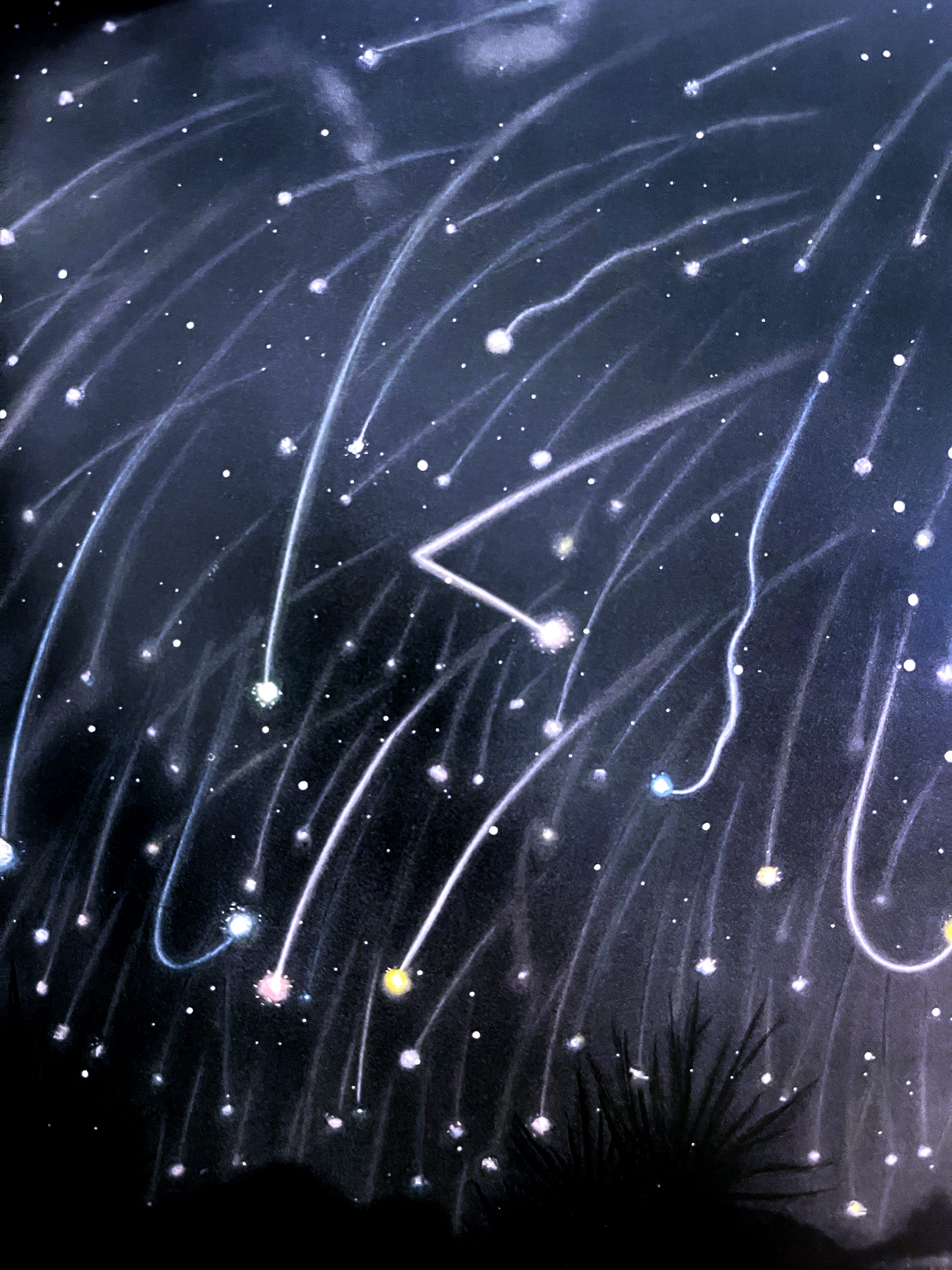
(The November Meteors by Étienne Léopold Trouvelot)
A new album project always starts with one song. Let's call it the pioneer song. A song that feels like it could be the foundation for a whole city of songs. A flag planted in a field. A place to dig a well and find water.
Here.
That's what the beginning of any artistic project—book, album, film score—always feels like to me: a clear, determined Here. A shovel in the dirt. And then you have something to move forward with.
For me that begins with a spreadsheet. If I have made a spreadsheet about a project, it means I am taking it seriously. It means it's going to happen. I make columns, color-code them, give it all a title, and then I am officially working on a thing, a puzzle to solve over the next three months to three years. It is a signal to the muses that I am willing to show up for work.
I once heard the film producer Brian Grazer say there is something powerful in Hollywood about writing even the simplest idea down on paper. Even if it's just a phrase like "A movie about a post-apocalyptic dentist." When you write it down, it becomes a thing. Then you can start getting other people involved, actors and cinematographers and directors, find a screenwriter, and then you have something, you have a project, and other people start talking about it, "Have you heard about this post-apocalyptic dentist script? I hear Benedict Cumberbatch is attached."
With an album, the first thing to attach to the pioneer song is not (necessarily) a Benedict Cumberbatch, but other songs that have a similar feel, instrumentation, or theme as the first one.
The first song for my new album The Monster Mash came in a sea of grief in June of 2024. An unexpected divorce shook me from not just a home and a city but took me off a life path I thought was secured. Then my dad had a heart attack and a complicated recovery and in the midst of that there was an unexpected falling out with a good friend. One step after another, the earth would just fall away under my feet.
I didn't want to write a new album. I didn't want to make a grief record, or a revenge record, or any kind of record. I wanted to lie in bed crying all day. It physically hurt to see people playing games or laughing. There was so much I knew I couldn't ever write about what I was going through, for the sake of other people's privacy, or for the sake of my own confusion about why any of it was happening.
In times of great duress, I am not the only human in the great scroll of history who has turned to the stars for solace. I don't even necessarily mean star charts or readings, but just the simple meditation on a star, out there impossibly far away, beaming its light in all directions, with no idea who will be on a planet somewhere to look up at it and wish upon it.
That is what makes stars so good for wishing on: they are just so god damned far away, that we think maybe somewhere along the journey of our wish to the star, someone will intercept it and feel benevolent towards us.
I bounced around to different houses, first my parents in Sacramento and then a series of pet sits around the country. I was feeding chickens at my friend Kate's house in Portland and she had this old Washburn parlor guitar from the 1890s that she had found in a barn in Michigan with a broken neck and then fixed up. She said I was welcome to play it.
I am interested in the instruments that have songs bursting out of them, blooming, fertile, life-giving instruments. This is the occasional unexpected magic in staying in someone's house. Granted, sometimes they have an enormous television I never turn on, but other times they have a hundred-and-thirty-year-old guitar.
This soulful instrument was what cajoled me back into making music. I barely even touched it and a song came out. It had cracks all over it, and repair jobs from different decades, like a history textbook that had been torn up and rewritten and then put back as close as possible to how it was.
Parlor guitars are smaller than most models. I suppose they were meant to be perfect for stashing in a corner of your parlor, ready to whip out when you wanted to entertain or woo a guest.
Here I was, over a century later, wooing my own self. Beckoning a shattered part of my soul to consider joining together again.
How does a gentle thing like an acoustic guitar even survive that long without being lost in a fire or falling under the boot of a drunk and jealous tradesman? How does a guitar made in that far off decade sound so much better than so many guitars made since? Does it, like a star, gain profundity because of the length of its journey?
It's not my job to analyze these things, it's just my job to set the songs from the instruments. I picked up Kate's guitar and immediately started playing a little phrase that I had composed for the choreographer Candace Bouchard's dance piece a decade before called "A Conversation With Myself." A simple, sweet guitar phrase with a lot of breath in it. Choreographers love breath, I have found. This guitar loved breath, too, I soon discovered. It rewarded the pauses, the moments of expression, demonstrating a remarkable sustain—perhaps not that surprising when you think of the endurance needed for pieces of wood glued together to survive two world wars and the digital age.
That little phrase just popped out of my memory for some reason. G to D to E minor. It came alive and asked for more.
My first thought was, "Can I do this? Can I take a piece of instrumental music meant for something else and, years later, turn it into a song?"
And then, that liberating voice telling me, "Who the fuck cares?"
In a good way, that is. There are many moments when the "Who the fuck cares?" scuttles the entire desire to create something, but in this case, it was the bit of cynicism I needed.
But could I attach words to music so long after the fact? Like, would the song allow it? Perhaps the music would be hardened over, covered with a resin, impenetrable to any lyrical content.
No, in fact. Almost immediately I thought about a passage from a memoir I was editing written by an astrophysicist. In it she tells a story of being in a class once with a professor who had an opportunity to use the Hubble telescope. It's very hard to get time on that telescope for obvious reasons. It is usually oversubscribed with astronomers wanting to use it, but somehow he landed a two week period where no one had reserved it. This professor had the idea to focus the world's strongest telescope on a particularly empty patch of space and leave the shutter open to see what was there. When he got the data back, he found in this bare patch of sky there were 3,000 new galaxies, each with millions of stars.
I paired that idea—of finding a great abundance in a thought-to-be-scarce place—with the guitar phrase from the dance piece and now it was a song. The beginning of a song, but it already had a title, "Stargazers," and I began recording demos of it. I attended a reading the poet laureate of Oregon Anis Mojgani gave at the Hoyt Arboretum in Portland in July, and as his voice echoed through the green canyons I polished in my mind the verses of this new song.
What I'm asking is to step out of the bars
and pull out every ounce of light
from where you can't believe there are stars
that far back, tar black, reservoir of ours
It's appropriate that the foundational song for a new album would be about stars. I often think in terms of gravity when I'm starting a new project. I want something strong enough, bright enough, and powerful enough to pull other objects into its orbit, to be the center of a new system. This one had all the qualities of being that starter song, and one of the traits of it was that it was played on Kate's Washburn parlor guitar. If I could get enough time with the guitar, or if I could find an equivalent one myself, I could potentially create a group of songs that all went together.
More on that later.
Always with a creative work, there is this lurching boxcars feeling. You get inspired by a possible direction, you think you know what comes after it, and then you hit a snag and everything stops. Those lurches are still progress, though, even if they can be frustrating. You are trying to get a lot of elements to come into alignment. It should be hard.
"Stargazers" is a complex song and, in retrospect, kind of a funny foundational piece. By which I mean it didn't immediately seem like a repeatable process of composition, or a type of song that would have a dozen others like it. It also proved difficult to record. After three different recording attempts in three different studios, and after changing the main instrument from acoustic guitar to electric guitar to piano, I determined that "Stargazers" ultimately didn't fit with the rest of the songs that came after it.
To emphasize:
This song I'm telling you about isn't on the finished album.
But it is still part of the story. How does a star end up not belonging to the system it started? Don't all the planets then spin out of orbit and everything falls apart?
Well, I suppose we've learned how the trails of that star's influence can go far beyond just its own neighborhood. There are ways things can start to make sense long after you've given up on trying to make sense of them.
My job is one of sense making. I can't give up on that duty, even at the lowest times.
Maybe there is some unseen gravity that we just have to trust is there. Maybe there is more abundance than we realize.
Regardless, this song "Stargazers" was the first name on that project spreadsheet, with the document title "New Album 2024." I have a lot of favorite feelings in this world, but typing out that new spreadsheet is a quiet, private one I hardly ever get to share with anyone. And "Stargazers" was the pioneer song, making it seem possible that there was even an album to record at all, a confidence I truly needed.
Over the next few weeks, I'll talk about how the album came into focus, but first, here is an early demo of "Stargazers" that offered the very first flickering of possibility for a new album.
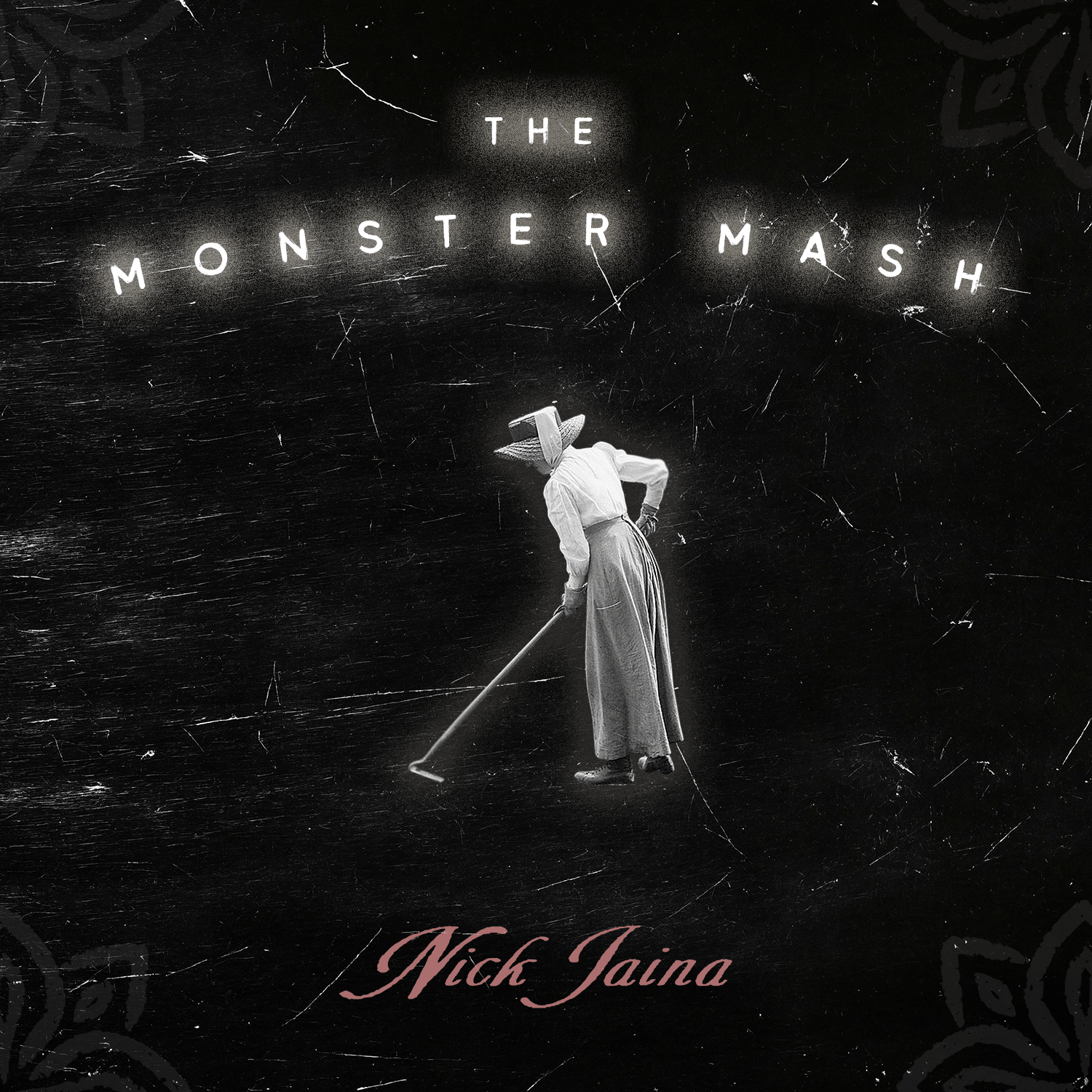
The album is currently available only on Bandcamp.
Thank you for this peek into your process. Lovely.